Eye Hospital in Patiala for Cataract, LASIK, Retina and Complete Eye Care
Garg Eye Hospital is an eye hospital in Patiala that has treated eyes since 2016. Dr. Amandeep Garg, MBBS, DNB, performs cataract (motiyabind) and LASIK surgery. OPD is open Monday to Saturday, 9 AM to 5 PM.
Quick answer
Garg Eye Hospital is an eye hospital in Patiala, Punjab, set up in 2016. It treats cataract (motiyabind), LASIK and ICL for spectacle removal (chashma hatana), glaucoma (kala motia), retina and diabetic eye problems, squint and lazy eye, and eyelid conditions. Dr. Amandeep Garg, MBBS, DNB, performs cataract and LASIK surgery. Patients rate the hospital 5.0 on Google from more than 1,500 reviews. Cashless treatment is available with many insurers and schemes, subject to your policy. OPD runs Monday to Saturday, 9 AM to 5 PM. Call +91 98554-91500 to book.
How does an eye hospital in Patiala work, in simple words?
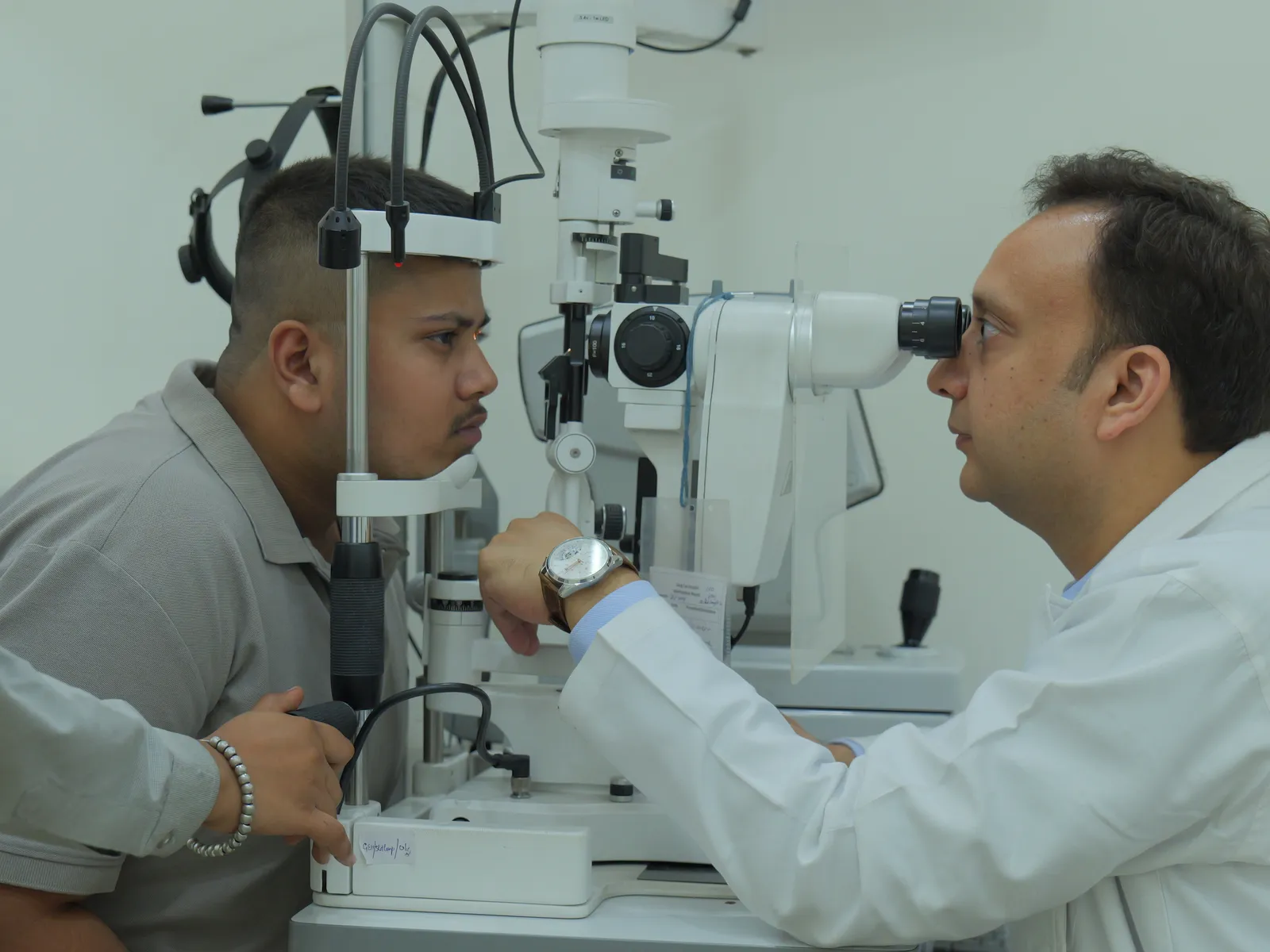
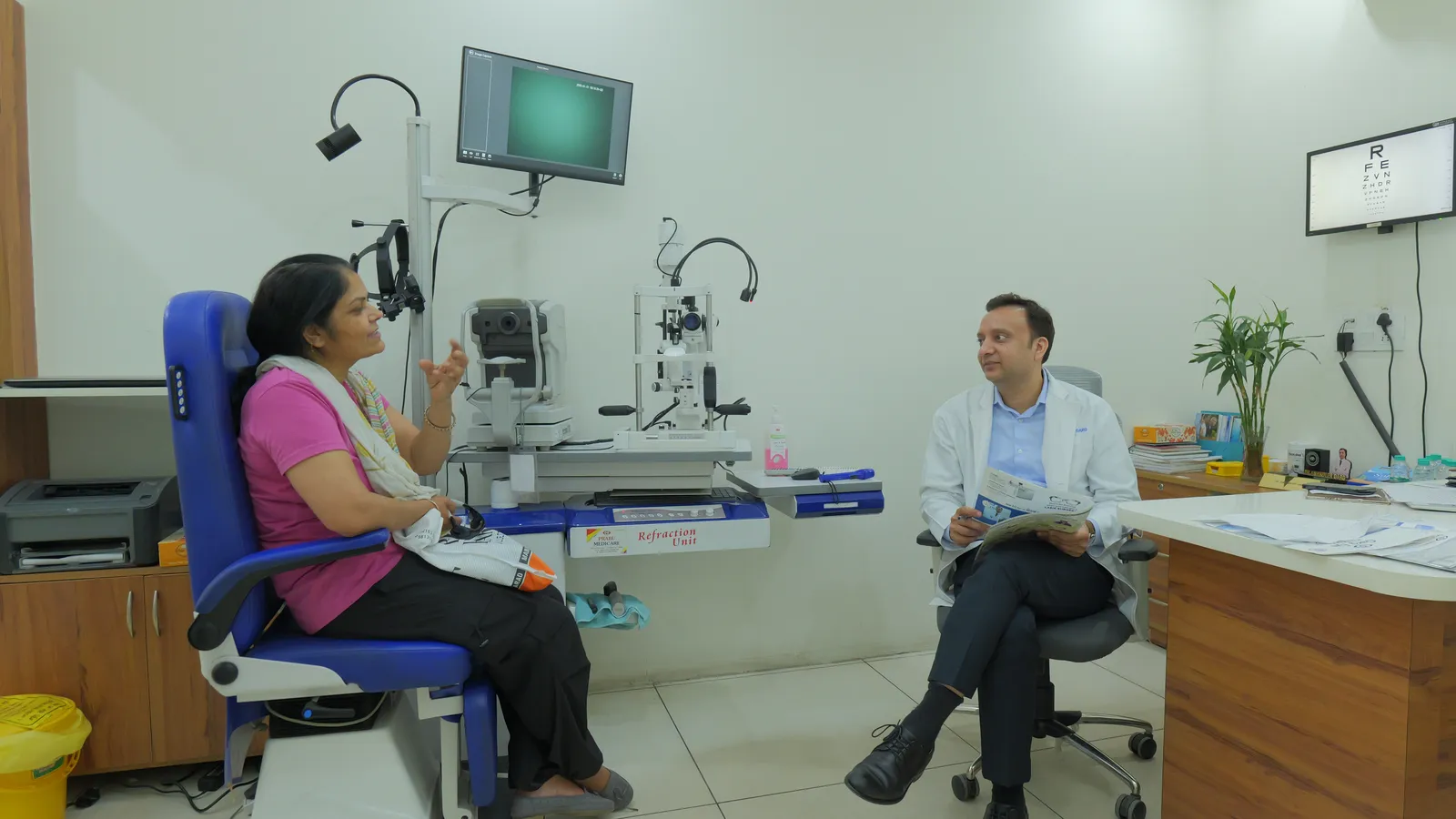
An eye hospital is a place where the eye is examined, treated and operated on under one roof. People who search for eye care in Patiala often want exactly this: tests, a specialist and surgery in one building. A spectacle shop can test your power and sell glasses. It cannot check the pressure inside your eye, look at your retina or operate. At Garg Eye Hospital, one visit can include a vision test, an eye pressure check, a dilated look at the back of the eye and a talk with the surgeon.
Your eye works like a camera. The cornea and the lens focus light. The retina at the back catches the picture. The optic nerve sends it to the brain. A problem at any one point blurs the whole picture, so the first job is to find which point has failed.
- Cornea: LASIK reshapes it.
- Lens: cataract (motiyabind) clouds it.
- Drain angle and optic nerve: glaucoma (kala motia) damages them.
- Retina and macula: diabetes, tears and detachment affect them.
Which eye problems do people in Patiala come with?
People rarely arrive with a medical name. They say "everything looks foggy" or "my child tilts her head". The table below matches common complaints to the likely cause and to the department that handles it.
| What you notice | Medical name | Where it is treated |
|---|---|---|
| Foggy, dull sight, glare at night | Cataract (motiyabind, safed motia) | Cataract surgery |
| Thick glasses, wish to be free of them | Refractive error (myopia, hyperopia, astigmatism) | LASIK and ICL |
| Side vision slowly shrinking, no pain | Glaucoma (kala motia) | Glaucoma treatment |
| Flashes, new floaters, a curtain over the sight | Retinal tear or detachment | Retina treatment |
| Blurred sight in a person with sugar | Diabetic retinopathy | Diabetic eye care |
| One eye turns in or out | Squint (tirchi aankh) | Squint treatment |
| One eye sees less since childhood | Lazy eye (amblyopia) | Lazy eye treatment |
| Droopy eyelid, lump on the lid | Eyelid conditions | Oculoplasty |
World Health Organization figures show how much of this can be prevented or treated. Cataract accounts for about 94 million of the roughly 1 billion cases of vision loss that were preventable or never treated worldwide. Uncorrected refractive error accounts for about 88.4 million more (WHO fact sheet on blindness and visual impairment).
What do patients worry about before an eye visit?
We hear the same ten worries at the desk. Naming them helps, because most have a plain answer.
- "Will the operation hurt?" Cataract and LASIK are usually done with numbing drops. You feel pressure, not pain.
- "Will I be awake?" Yes, for both. You look at a light while the surgeon works.
- "Will I lose my vision if something goes wrong?" Every surgery carries some risk. We explain the risk for your eye before you sign anything.
- "Is my cataract ripe?" Modern surgery does not wait for ripeness. The time to operate is when daily life suffers.
- "I have sugar. Can I still have surgery?" Often yes, once the sugar is under control. We check your retina first.
- "Can I get rid of my glasses?" Many people can. Some cannot, and we say so after the tests.
- "How many days off work?" Most people with day-care surgery rest for a few days. Dr. Garg gives the number for your job and your eye.
- "Can my father travel alone?" An older patient should come with a family member on surgery day.
- "Will insurance pay?" Cataract usually qualifies when your policy allows it. LASIK usually does not.
- "What will it cost?" The price depends on the lens and technique. The price table below shows Patiala ranges.
Which eye symptoms need a booked check-up?
Some eye changes come on slowly, and people put them off for months. Book a visit within a week or two if you notice any of these: a gradual blur that glasses do not fix, trouble driving at night, glare from headlights, headaches after reading, a child sitting too close to the television, or loss of side vision that you only notice when you bump into things. A change in one eye alone also deserves a visit, because the other eye can hide it.
Call the hospital on +91 98554-91500 if you are unsure how soon you need to be seen. The desk will tell you the first available OPD slot.
Which eye treatments does Garg Eye Hospital offer?
Seven areas of care sit under one roof. Each has its own page with the full detail.
Cataract surgery (motiyabind operation)
A cataract is a clouding of the natural lens. Phaco surgery breaks the cloudy lens with ultrasound through a small cut and places a clear artificial lens (IOL) in its place. We use the Stellaris Phaco System. Before surgery, the IOL Master and Lenstar measure your eye so the lens power is chosen with care. Read the full guide to cataract surgery in Patiala or the Hinglish page on motiyabind ka operation.
LASIK and laser vision correction (specs removal surgery)
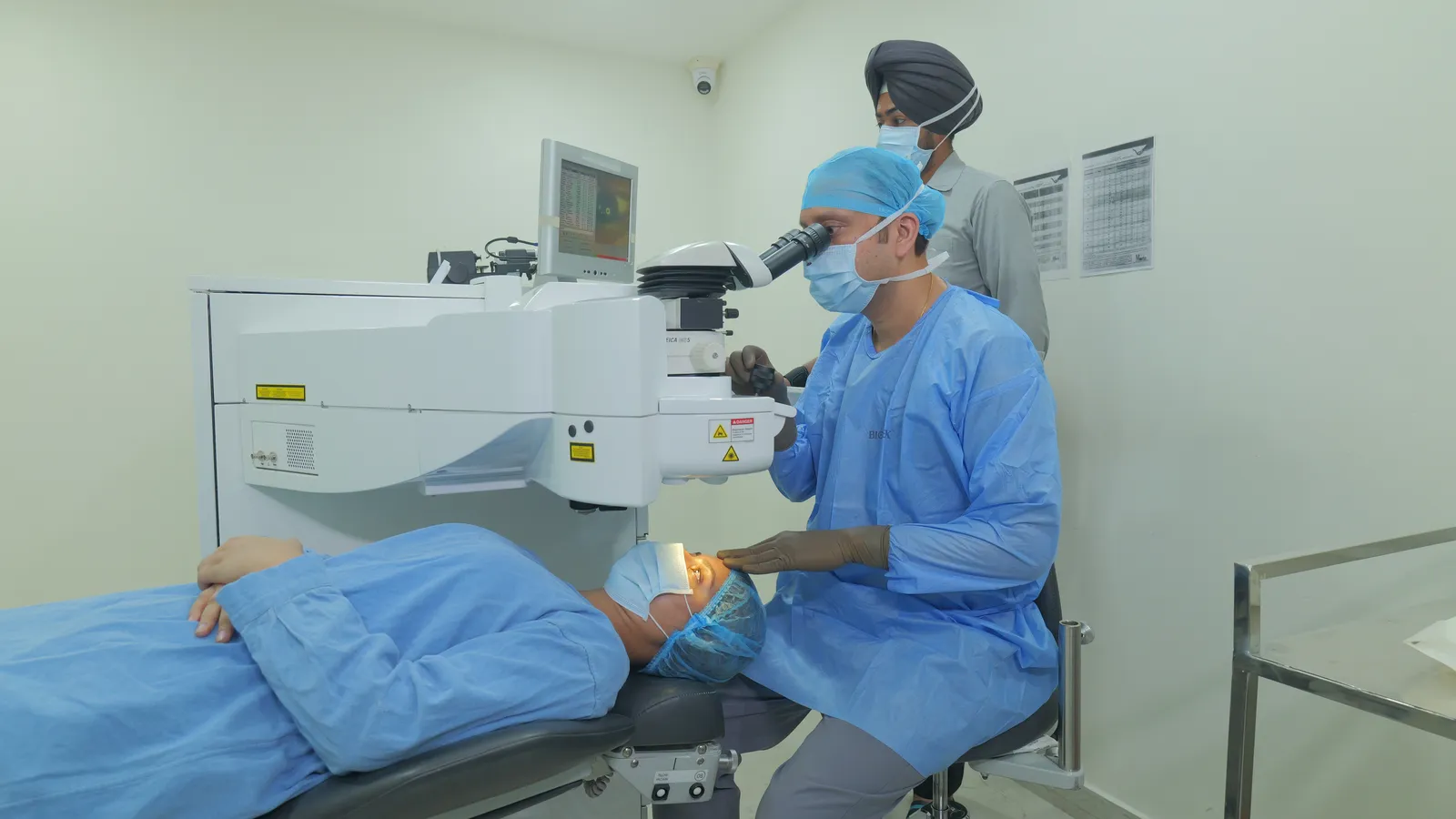
LASIK uses two lasers. The femtosecond laser makes the corneal flap. The excimer laser reshapes the cornea to remove your power. Pentacam maps the cornea first, and the pachymeter measures its thickness. A thin or uneven cornea can rule LASIK out, and then another option is better. See LASIK surgery in Patiala, LASIK cost and the page on chashma hatane ka operation.
ICL surgery (Implantable Collamer Lens)
ICL places a thin lens inside the eye, in front of your natural lens. It is for suitable patients, often those with high power or a cornea too thin for LASIK. The cornea is not reshaped. Details are on the ICL eye surgery page.
Glaucoma treatment (kala motia)
Glaucoma damages the optic nerve, often because eye pressure runs high. In its common form there is no pain and no early warning. Vision that is lost cannot be brought back, so the aim is to stop further loss. We check pressure with the tonometer and the nerve with OCT. Treatment may be drops, laser or surgery. See glaucoma treatment in Patiala and the kala motia treatment page.
Retina and diabetic eye care
The retina is the thin layer that catches light. Diabetes can damage its small blood vessels without any symptom in the early years. Our OCT and Digital Fundus Angiography show the retina and the optic nerve in detail. Read about retina treatment in Patiala and diabetic eye disease.
Children's eye care, squint and lazy eye
A child cannot say "my left eye is weak". We look for it. Squint is an eye that turns in or out. Lazy eye is poor vision in an eye that looks normal. Treating it before the age of about 8 gives the best chance, though adults are also assessed. See squint treatment, lazy eye treatment and the child eye specialist page.
Oculoplastic and reconstructive eye care
This covers the eyelids and the tissue around the eye. Examples are a drooping eyelid and a lump on the lid. See oculoplasty surgery.
How do we examine your eyes, step by step?
A full eye examination follows a fixed order, so nothing is missed. The steps below are what most new patients go through.
- History. We ask about your complaint, your sugar and blood pressure, past surgery and the medicines you take.
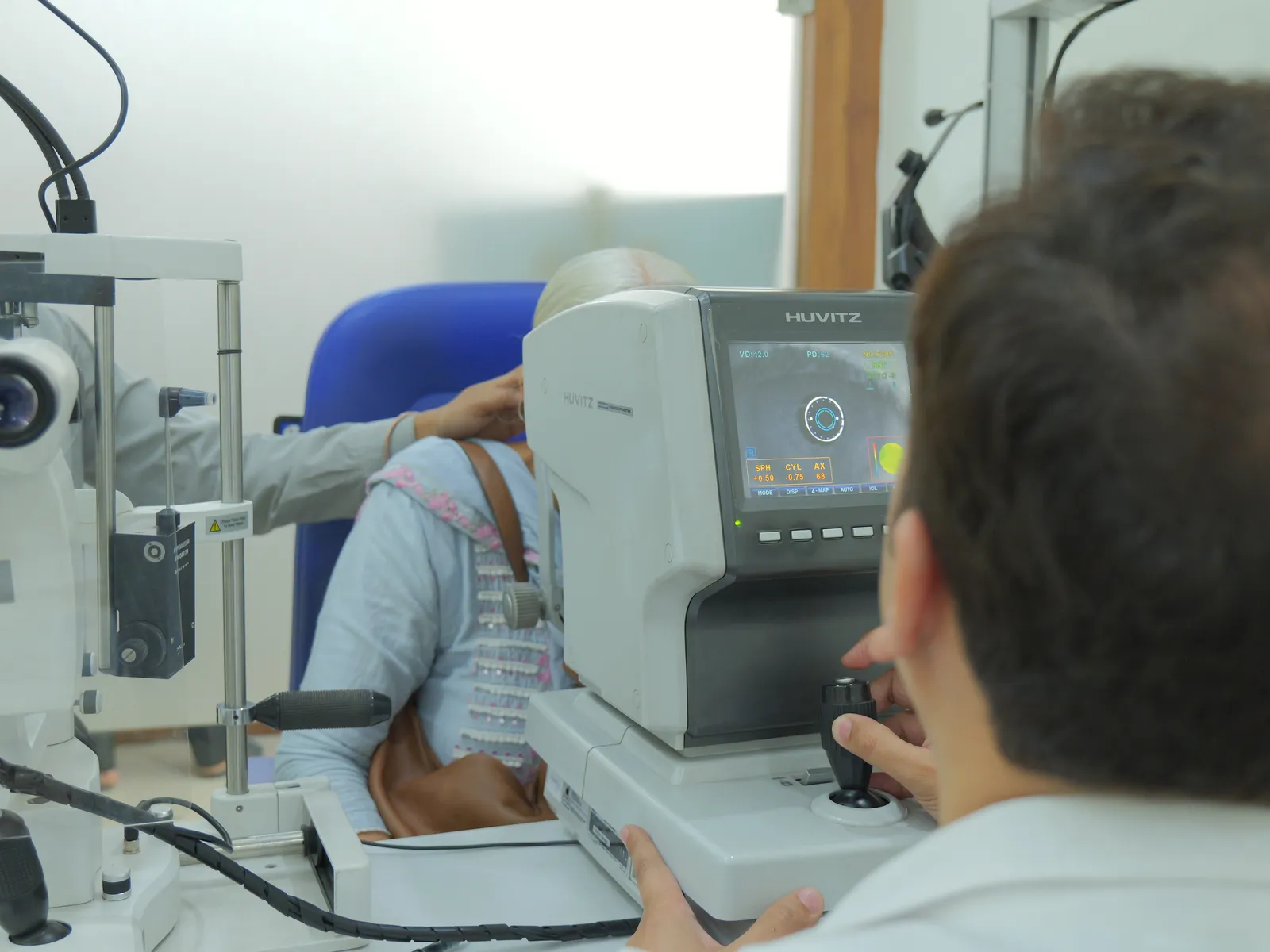
- Vision and power. The auto-refractometer gives a first power reading. Then the doctor refines it with lenses.
- Eye pressure. The tonometer measures the pressure inside the eye in seconds.
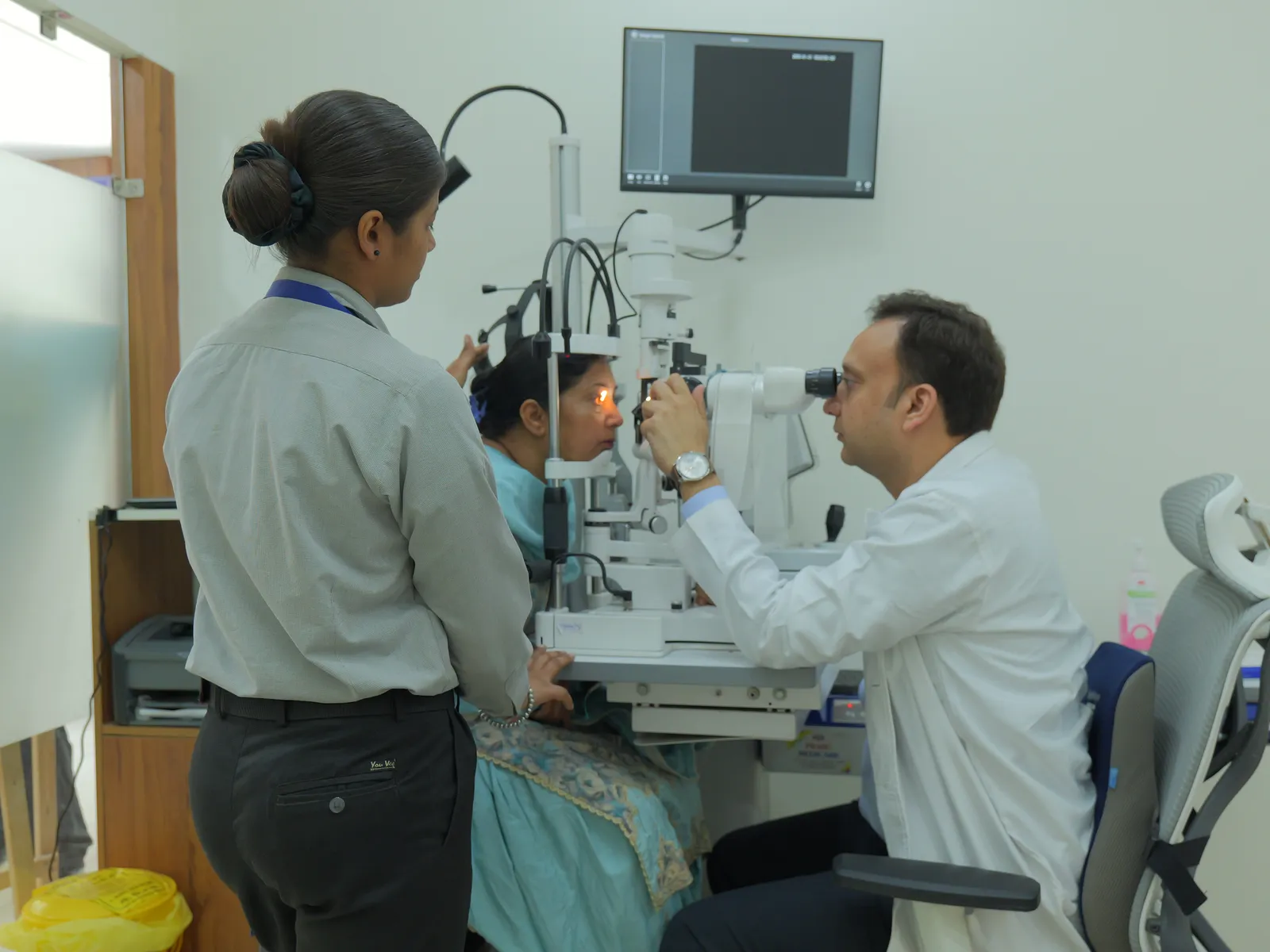
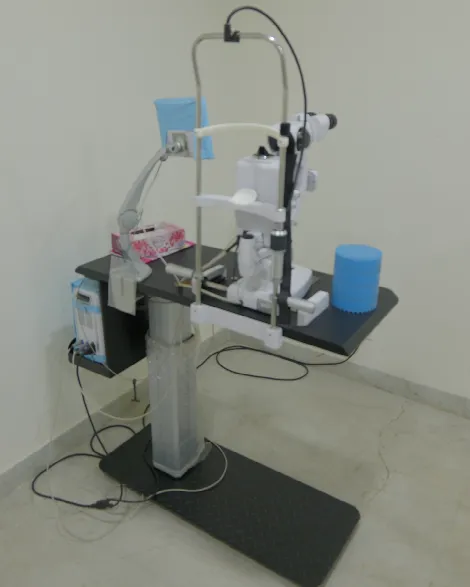
- Front of the eye. The slit lamp shows the cornea, the lens and the drain angle under magnification.
- Drops to widen the pupil. They take about 20 to 30 minutes to work. Your near vision stays blurred for some hours, so bring someone who can drive.
- Back of the eye. The doctor looks at the retina and the optic nerve. OCT adds a cross-section picture.
- Extra tests only when needed. Pentacam for the cornea, A and B Scan when the view is blocked, Specular Microscope for corneal cells, fundus angiography for retinal blood vessels.
- The plan. Dr. Garg explains what he found in plain words and what he advises. You decide.
- 1HistoryComplaint, sugar, BP, medicines
- 2Vision and powerAuto-refractometer
- 3Eye pressureTonometer
- 4Front of the eyeSlit lamp
- 5DropsPupil widens in 20 to 30 minutes
- 6Back of the eyeRetina, optic nerve, OCT
- 7Extra testsOnly when needed
- 8The planDoctor explains, you decide
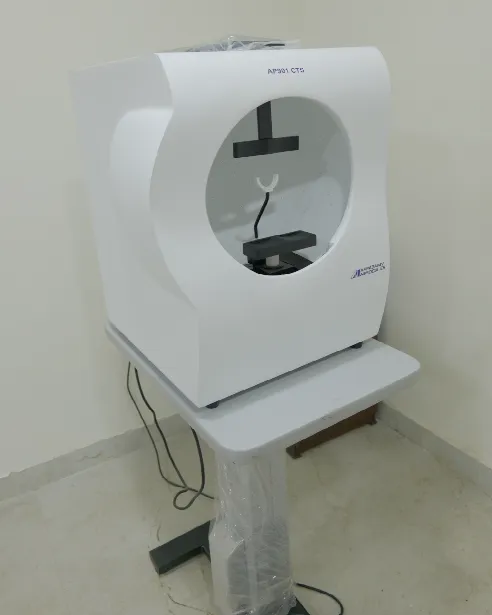
What equipment does Garg Eye Hospital use, and what does each machine check?
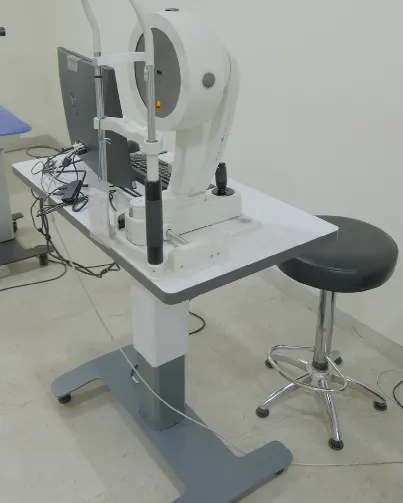
The hospital's website lists the equipment below. The right column says what each one does for you.
| Equipment | What it does for you |
|---|---|
| Stellaris Phaco System | Removes a cataract through a small cut |
| Femtosecond laser | Makes the corneal flap in LASIK |
| Excimer laser | Reshapes the cornea to remove your power |
| Pentacam | Maps the cornea in 3D to decide if LASIK or ICL is safe |
| Pachymeter | Measures corneal thickness |
| IOL Master and Lenstar | Measure the eye to choose the lens power for cataract surgery |
| OCT | Gives a cross-section scan of the retina and optic nerve |
| Digital Fundus Angiography | Photographs the retinal blood vessels |
| Specular Microscope | Counts and checks the cells on the inner cornea |
| A and B Scan | Eye ultrasound when the inside of the eye cannot be seen |
| Tonometer | Measures eye pressure |
| Slit Lamp and Auto-refractometer | Examine the front of the eye and read your power |
A machine only helps when a trained person reads it. That is why the doctor, not the machine, makes the decision about your treatment.
What happens on the day of cataract surgery?
Cataract surgery is the operation most of our older patients ask about, so here is the day in order. Your own plan may differ, and Dr. Garg will tell you the details.
You arrive at the hospital with a family member. Drops widen your pupil and numb the eye. Inside the theatre, you look at a light while the surgeon works. The Stellaris phaco handpiece breaks the cloudy lens, and the pieces are drawn out. The surgeon then folds an IOL into the same space. The cut is small enough that stitches are often not needed. After a short rest, you are checked and sent home with eye drops and written steps.
Follow-up is part of care. The first check usually comes the next day, and later checks follow over the coming weeks. Do not rub the eye, keep water and dust out, and use the drops on time. The second eye is usually done on a separate day, after the first has healed.
Why do patients choose Garg Eye Hospital in Patiala?
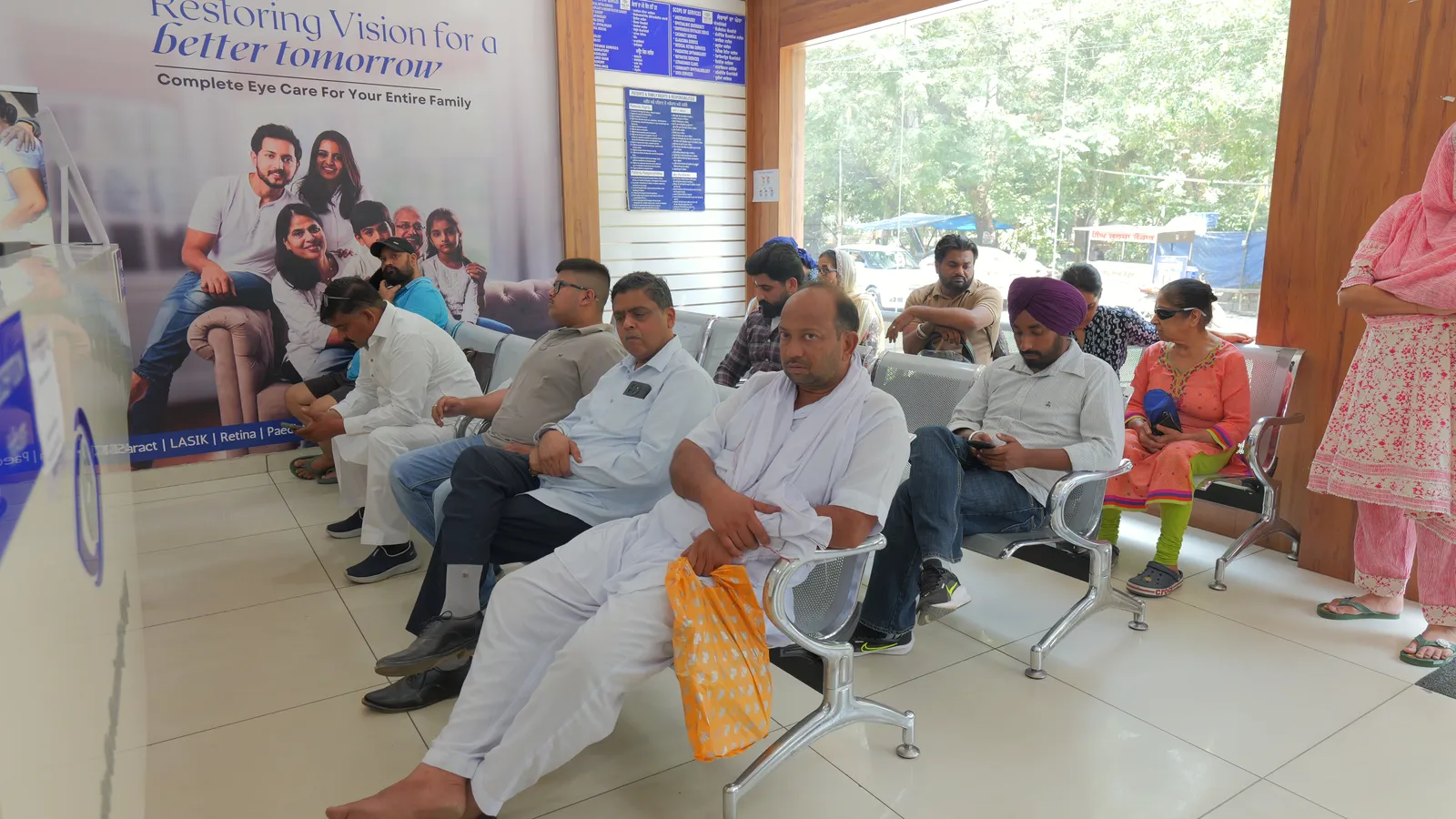
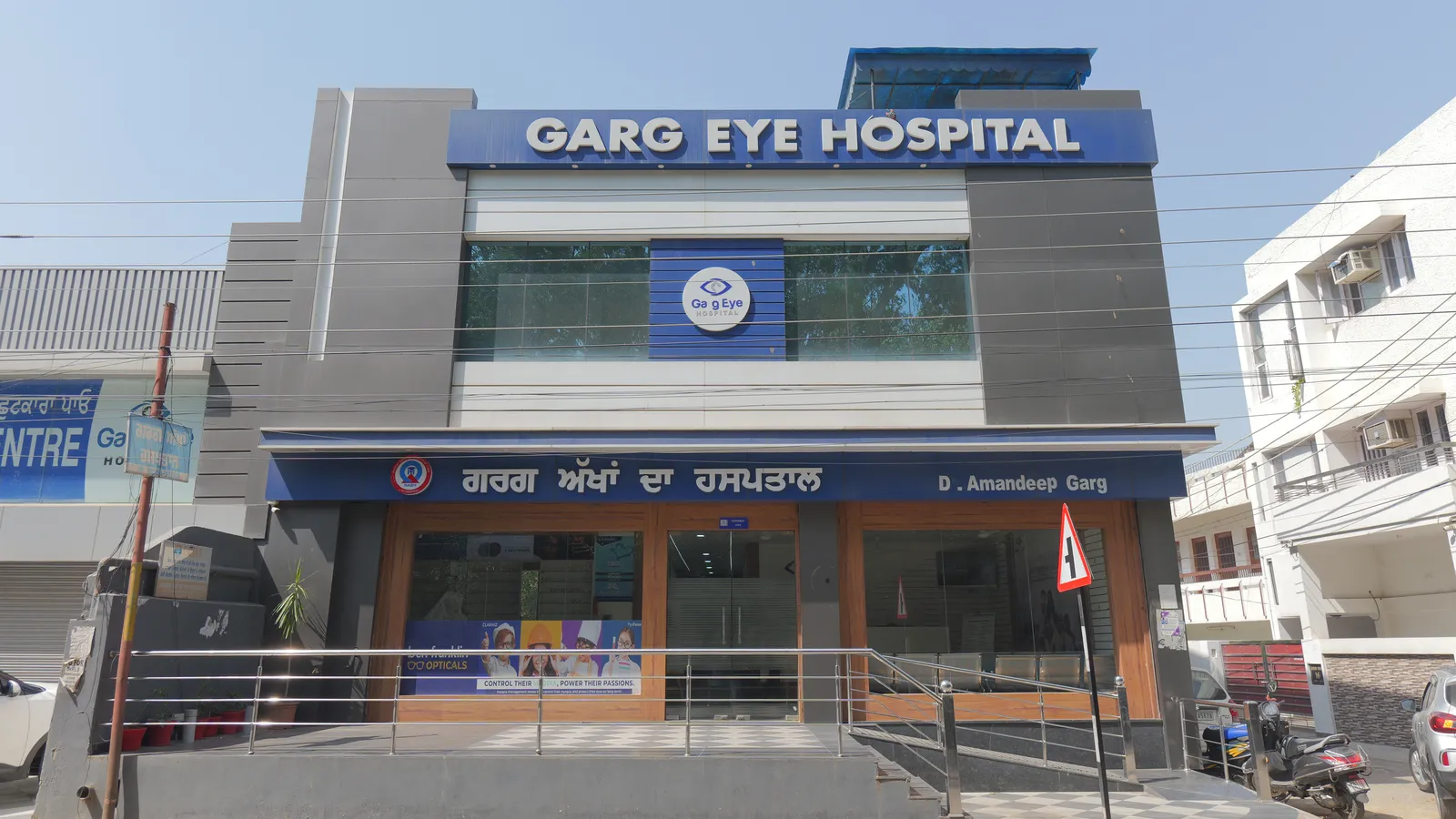
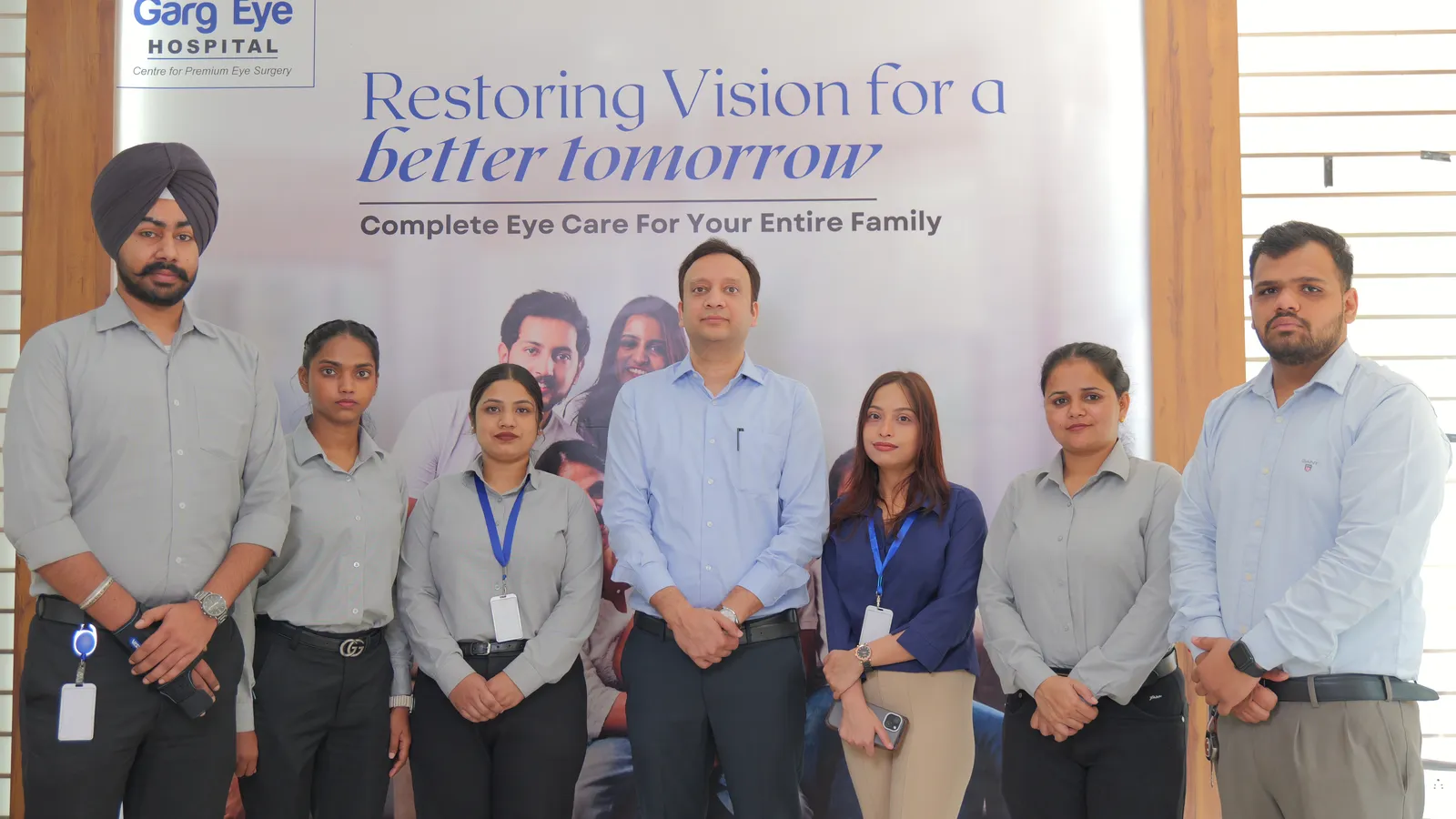
People who look for an eye specialist in Patiala, an ophthalmologist in Patiala or a nearby eye clinic usually want one place for tests and surgery. Five facts explain most choices. The hospital has treated eyes since 2016. Patients rate it 5.0 on Google from more than 1,500 reviews. A single surgeon, Dr. Amandeep Garg, MBBS, DNB, handles cataract and LASIK from the first test to the follow-up. The tests, laser, theatre, pharmacy and optical shop sit in one building. And the hospital works with a long list of insurers and schemes.
Who treats you? Dr. Amandeep Garg, MBBS, DNB
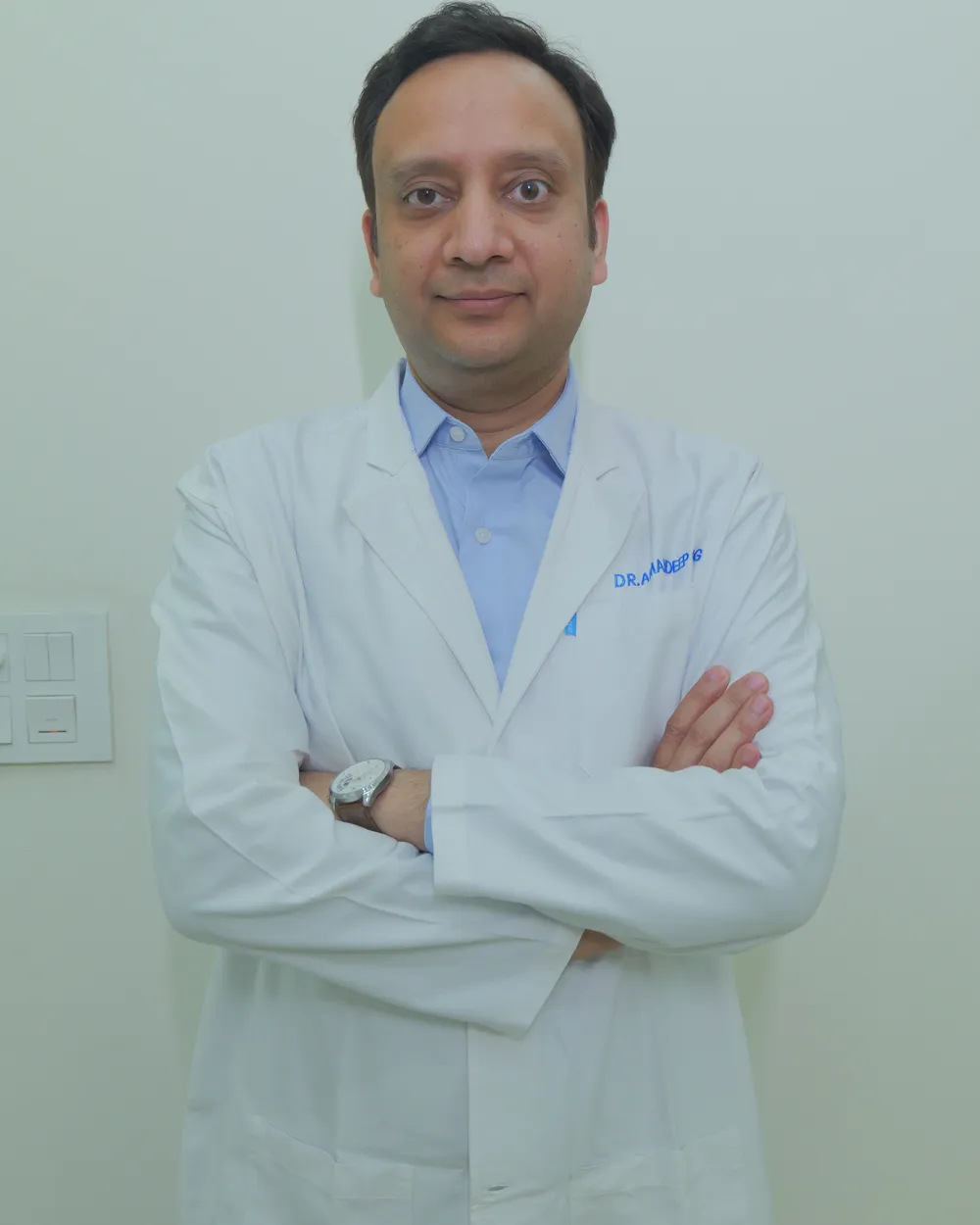
Dr. Amandeep Garg
MBBS, DNB, Phaco and LASIK Surgeon
Dr. Amandeep Garg specialises in cataract surgery and laser vision correction. His background includes an association with Sir Ganga Ram Hospital, Delhi, and a consultant role at Manipal (Columbia Asia) Hospital, Patiala. He takes time to examine, explain and then suggest a treatment that suits your eye.
Dr. Garg handles cataract, LASIK and ICL consultations. You can read his full profile on his own site, Dr. Amandeep Garg, or see all our doctors on the eye doctors in Patiala page.
Who is the best eye doctor in Patiala?
No one can honestly give one name, and you should doubt a page that does. Ask these four things of any doctor you consider: Is the registration number shown? Who will operate on you, and how many such surgeries do they do? Will they tell you when surgery is not needed? Is the price explained in writing before the day? We invite the same questions. For a full comparison guide, see best eye doctor in Patiala.
How often should you check your eyes at each age?
A check at the right age finds problems while they are easy to treat. The ages below are common guidance. Dr. Garg may advise a different schedule for your eyes.
| Who | When to get checked |
|---|---|
| Child | Around age 3, and sooner for a turned eye or head tilt. Then every year if glasses are worn |
| Adult 18 to 39 | Every 2 years, or yearly if you wear glasses or lenses |
| Adult 40 and above | Every year, for pressure, reading power and early cataract |
| Anyone with diabetes | Once a year with a dilated retina check, from the time of diagnosis |
| Family history of glaucoma | Every year from age 40, or earlier on the doctor's advice |
| Age 60 and above | Every year, with a family member for surgery planning |
Myths and facts: what people in Patiala often believe about eyes
| Myth | Fact |
|---|---|
| A cataract must "ripen" before surgery | Modern phaco surgery does not need ripening. Surgery is planned when daily life is affected |
| Eye drops can melt a cataract | No drop is proven to remove a cataract. Surgery is the treatment |
| Glaucoma always hurts | The common type gives no pain and no early sign. Eye checks catch it |
| Wearing glasses makes your power rise | Glasses do not raise power. Power changes with growth, age and eye health |
| LASIK suits everyone | It needs a healthy, thick enough cornea and a stable power. Some people need ICL or glasses |
| Eye surgery needs weeks in bed | Cataract and LASIK are usually day care. Rest is advised, not bed rest |
| A child will outgrow a squint | A turned eye can cause a lazy eye. It needs an examination |
| Carrots fix eyesight | A balanced diet helps eye health. It does not remove power |
How can you protect your eyes every day?
Small habits protect eyes between visits. Look away from a screen every 20 minutes and focus on something 20 feet away for 20 seconds. Wear sunglasses that block ultraviolet light in strong sun. Do not rub your eyes, because rubbing can harm the cornea. Keep sugar and blood pressure under control, because both damage the eye's small vessels. Wash your hands before touching your eyes, and never share eye drops or kajal with others. Use only the drops your doctor prescribes.
What should you ask any eye hospital before you agree to surgery?
These ten questions protect you wherever you go. We answer each of them in writing on request.
- Who exactly will operate on me?
- What is my diagnosis, in plain words?
- What other options do I have, including no surgery?
- Which lens or technique do you suggest, and why?
- What can go wrong in my eye, and what do you do if it does?
- What does the price include: tests, medicines, follow-up visits?
- What changes the price on the day?
- How many follow-up visits will I need, and are they free?
- Who do I call if I have pain at night?
- Does my insurance cover it, and who files the claim?
How does your first visit to Garg Eye Hospital work?
Come during OPD hours, Monday to Saturday, 9 AM to 5 PM. Booking by phone cuts the wait, but a walk-in is seen too. Bring your old glasses and prescriptions, a list of your medicines, and any sugar or blood pressure reports. If you hold an insurance policy, bring the card and a photo ID.
An eye test here means more than reading letters off a chart, as the steps above show. Plan for a visit of some hours. The pupil-widening drops alone take 20 to 30 minutes to work. Children can take longer because they need a calm, careful test. Arrive with a family member if you are over 60 or if a child is being examined. The OPD fee is explained at the desk when you register.
How much does eye treatment cost in Patiala?
The price depends on your eye, the lens or laser used, and the care you need. The table gives Patiala and Punjab ranges from public listings read in November 2026. They are city ranges, not our price list.
| Treatment (per eye) | What it includes | Typical range in Patiala |
|---|---|---|
| Cataract surgery, standard monofocal lens | Phaco surgery and basic lens | Rs 15,000 to Rs 35,000 |
| Cataract surgery, premium monofocal lens | Phaco surgery and upgraded lens | Rs 30,000 to Rs 50,000 |
| Cataract surgery, toric lens | Phaco surgery and lens that corrects astigmatism | Rs 50,000 to Rs 90,000 |
| LASIK | Femtosecond-based laser vision correction | Rs 25,000 to Rs 60,000 |
| ICL | Lens placed inside the eye | Rs 50,000 to Rs 80,000 |
| Squint surgery | Muscle surgery, by number of muscles | Rs 30,000 to Rs 45,000 |
| Retina laser | One sitting | About Rs 3,000 |
| Retina injection | Depends on the medicine used | Rs 10,000 to Rs 65,000 |
| Glaucoma, diabetic eye care, children, oculoplasty | Depends on the finding | Priced after assessment |
Price line: Dr. Amandeep Garg sets your treatment and price after he has examined your eyes, because the lens, the technique and your eye condition change the cost. Call +91 98554-91500 for your figure.
Four things move a price: the lens type, the surgical technique, how complex your eye is (dense cataract, diabetes, earlier surgery), and what the package covers. Read the full guide to the cost of eye treatment in Patiala, cataract surgery cost and squint surgery cost.
Does Garg Eye Hospital offer cashless treatment and insurance?
Yes. The hospital works with a long list of insurers, TPAs (third-party administrators who handle claims) and government schemes. The names below appear in the hospital's own cashless list.
- Government and community schemes: ECHS (ex-servicemen), Ayushman Bharat, SGPC, Bhai Ghanhya Sehat Sewa Scheme.
- Insurers: Star Health and Allied, HDFC ERGO, Bajaj Allianz, Care Health, ICICI Lombard, Niva Bupa, SBI General, TATA AIG, IFFCO Tokio, United India Insurance, The Oriental Insurance, The National Insurance.
- TPAs: Medi Assist, Paramount, FHPL, Raksha, Vidal Health, Heritage and others.
Cashless approval depends on your policy terms, waiting period and sub-limits, and it needs pre-approval before admission. Cataract, glaucoma surgery, retinal surgery and corneal conditions are usually claimable when medically needed. LASIK, ICL and premium lenses are usually not covered, because insurers treat them as elective. Our insurance desk reads your policy before the day of surgery and tells you your position. See insurance and empanelments for the full list.
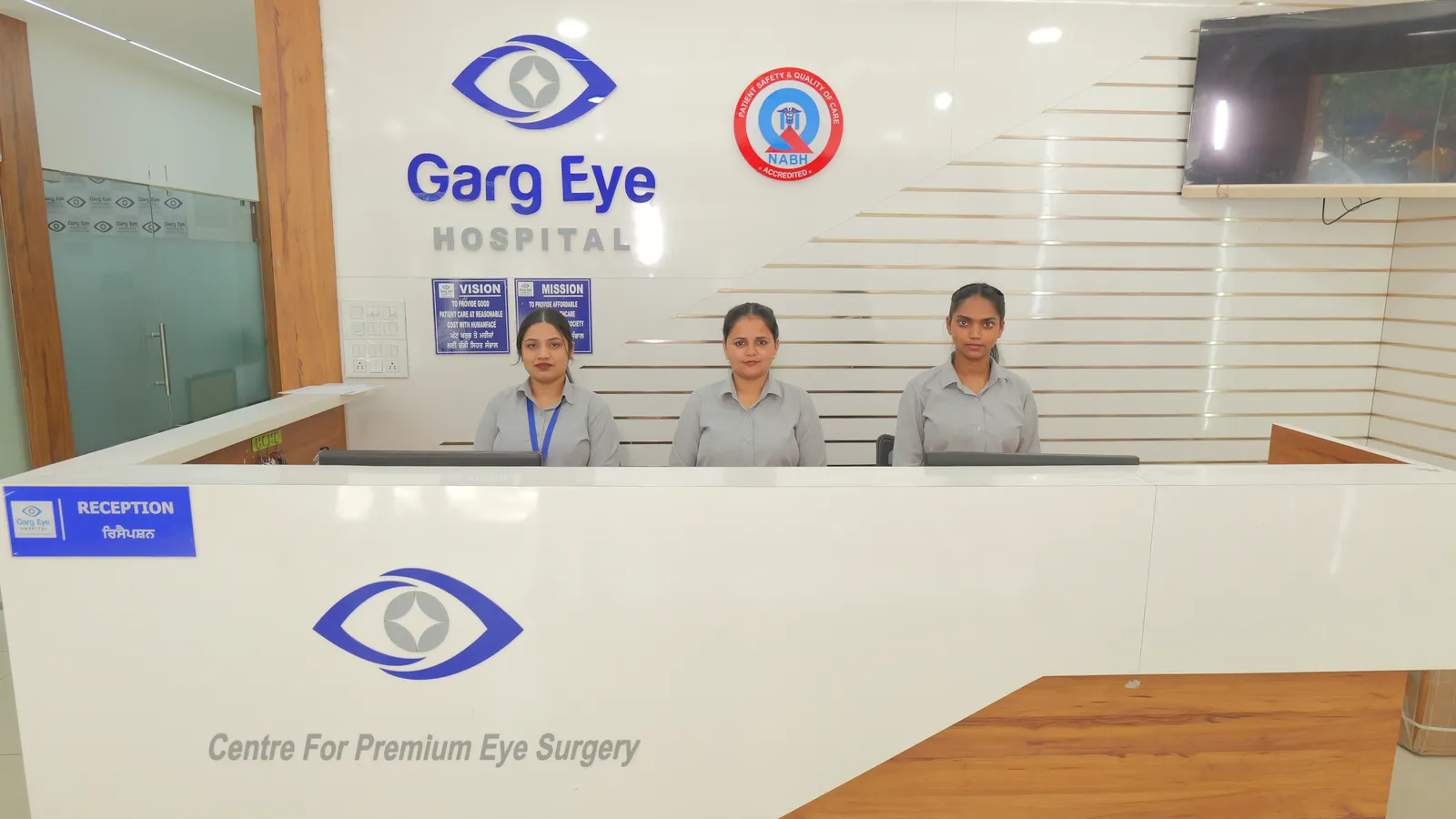
What facilities are under one roof?
| Facility | What it means for you |
|---|---|
| OPD and inpatient care | Consultation and admission in the same building |
| Surgical and laser facilities | Cataract surgery and LASIK done here, not referred out |
| Diagnostic tests | OCT, Pentacam, fundus angiography and more in the same place |
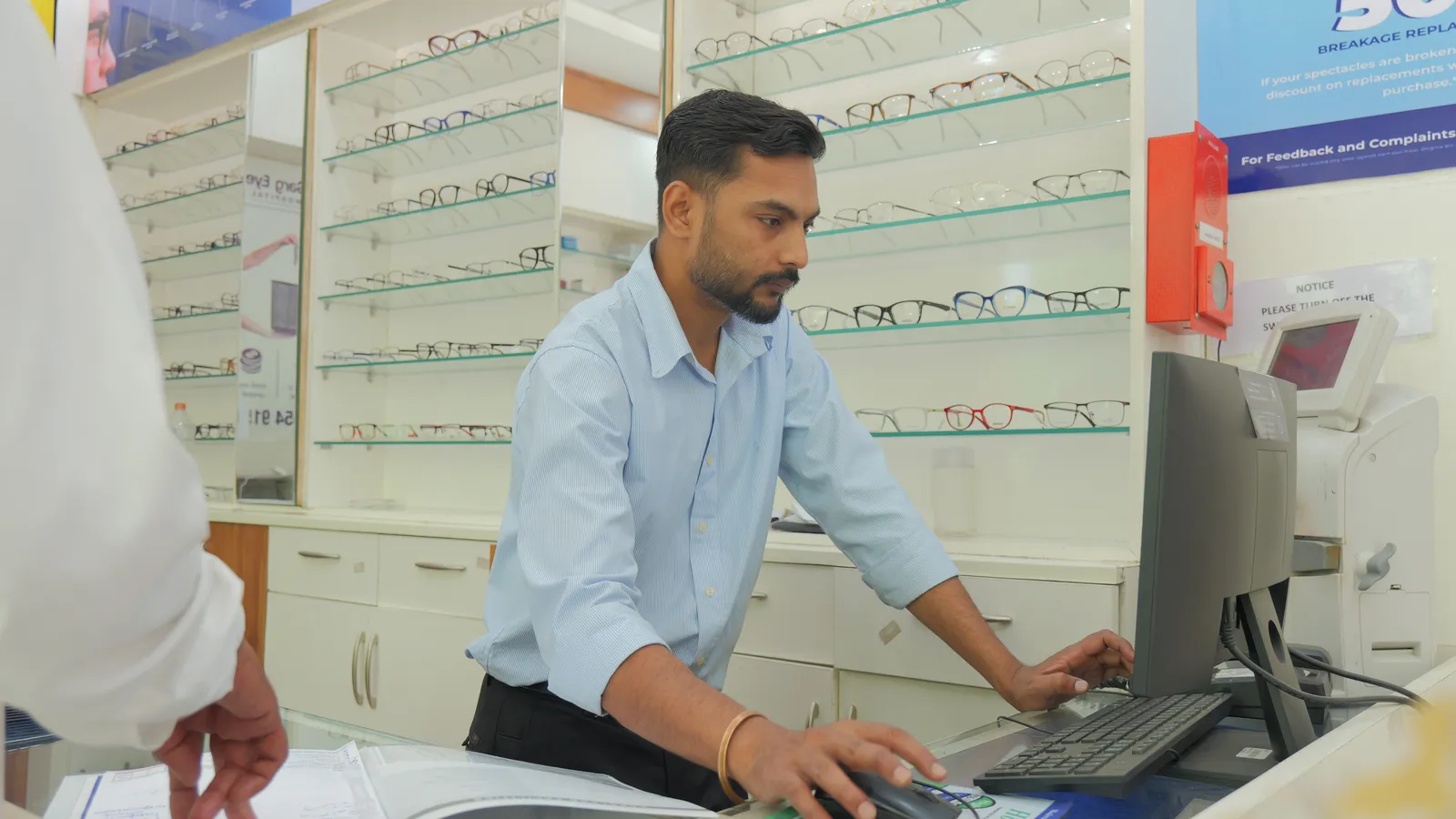
| In-house optical shop | Glasses fitted on the same visit |
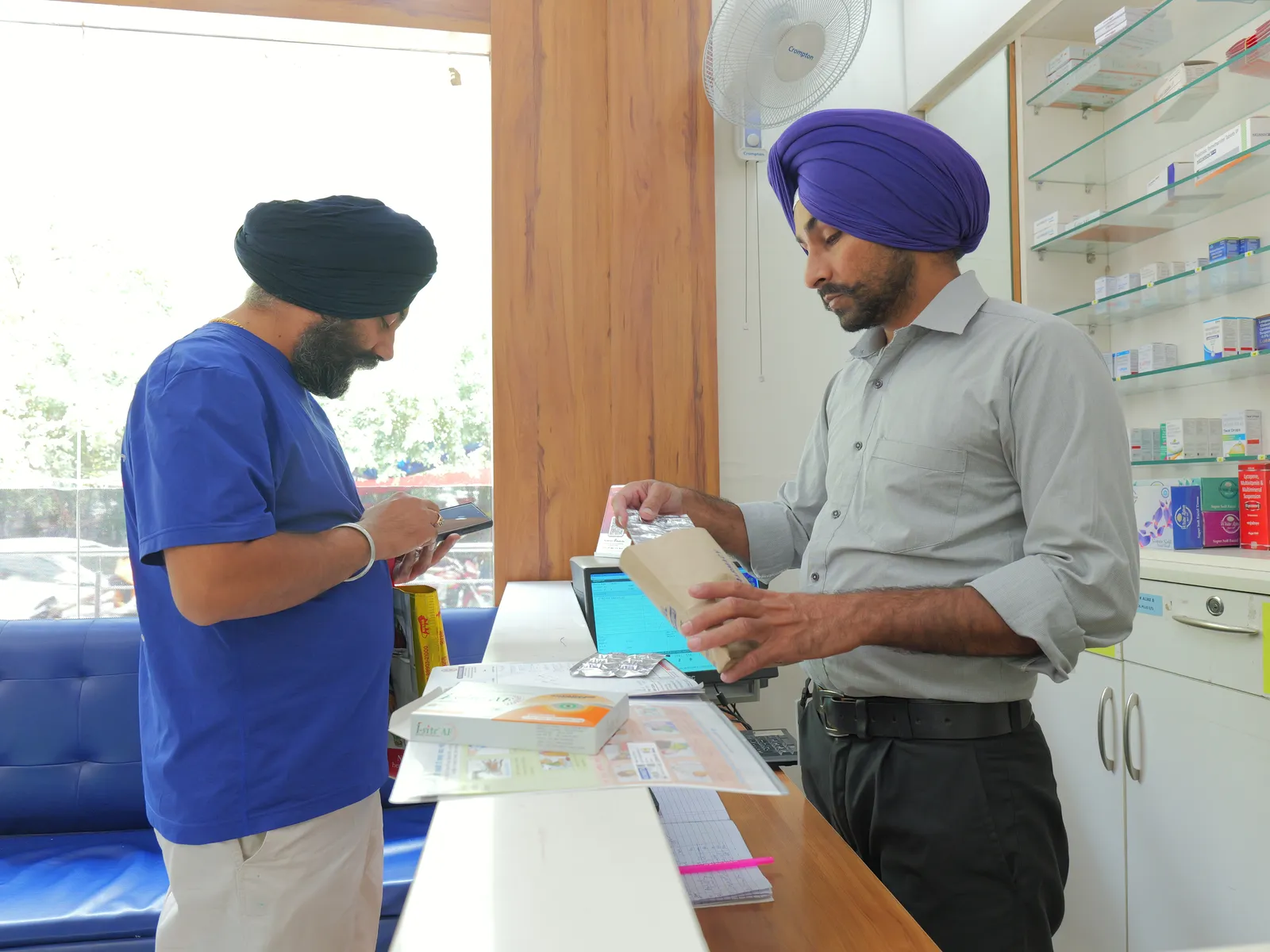
| Eye pharmacy | Prescribed drops available at the hospital |
| Follow-up care | Check-ups booked before you leave |
What care do you get after treatment?
Surgery is the middle of care, not the end. After cataract or LASIK, you return for check-ups on the dates Dr. Garg gives you, and the hospital keeps follow-up care as part of treatment. The in-house eye pharmacy stocks your drops, so you do not hunt for them. The in-house optical shop checks and fits glasses if you still need them for reading or fine power. For diabetes and glaucoma, we keep a schedule of repeat tests, because those conditions need watching for years.
Eye hospital near Nabha, Rajpura, Samana, Sangrur and other towns
Many of our patients travel to Patiala from towns 25 to 90 minutes away. The table shows how far each town is, so you can plan one trip instead of two.
| Town | About how far | Road link | What to plan |
|---|---|---|---|
| Nabha | About 25 km | Patiala-Nabha road | Same-day tests and review are possible |
| Rajpura | About 28 km | Patiala-Rajpura road | Leave early for tests, return by afternoon |
| Samana | About 28 km | Patiala-Samana road | Same-day tests and review are possible |
| Sirhind-Fatehgarh Sahib | About 50 km | Patiala-Sirhind road | Book a morning slot, allow a full day for surgery |
| Sangrur | About 1.5 hours | Patiala-Sangrur road | Book ahead, bring all old reports |
| Khanna | 1 to 1.5 hours | By road via Sirhind | Book ahead, tests first, doctor review after |
| Malerkotla | 1 to 1.5 hours | By road | Book ahead, bring a family member |
Patients from these towns travel to Garg Eye Hospital in Patiala, because the operation theatre and the equipment are here. Tell the desk your town when you call. We try to put your tests and the doctor's review on the same day. Surgery needs its own day, and follow-up visits come after it.
Which guides answer the questions patients ask most?
We write short guides in English, Hindi and Punjabi-friendly Hinglish for the questions patients type into Google.
- What is motiyabind? Cataract explained
- Chitta motia kya hota hai? Safed motia ke lakshan aur ilaj
- Kala motia aur safed motia mein fark
- Motiyabind operation ke baad kya khana chahiye
- Can specs be removed permanently? Honest answer
- LASIK surgery ke nuksan kya hain?
- Can kala motia be cured?
- Retina kya hota hai aur retina detachment
- Squint eye: can it be corrected in adults?
- Eye power kya hota hai? Cylindrical number samjhein
All guides sit in the eye care blog.
More eye care pages from Garg Eye Hospital
Go straight to the page that matches your need: best eye hospital in Patiala, eye checkup in Patiala, cataract surgery cost, IOL lens options, chitta motia treatment, specs removal surgery in Patiala, all eye treatments, eye emergency care, photo gallery and patient rights.
Frequently asked questions about Garg Eye Hospital, Patiala
Where is Garg Eye Hospital in Patiala?
It is in Patiala, Punjab. The full address, map link and phone number sit in the contact block at the end of this page.
Is there an eye hospital near me in Patiala?
If you live in Patiala or in a town within about 90 minutes, Garg Eye Hospital is the eye hospital near you. The town table above shows the distance from Nabha, Rajpura, Samana and others.
What are the OPD timings?
OPD is open Monday to Saturday, 9 AM to 5 PM. Call +91 98554-91500 to book, which reduces your waiting time.
How do I book an appointment?
Call +91 98554-91500 or use the booking form on this page with your name, phone and need. The desk then gives you a time.
Which eye problems does the hospital treat?
Cataract, refractive error (LASIK and ICL), glaucoma, retina and diabetic eye problems, squint, lazy eye, and eyelid conditions. Each has its own page above.
Who is the eye surgeon at Garg Eye Hospital?
Dr. Amandeep Garg, MBBS, DNB, a phaco and LASIK surgeon. He previously had an association with Sir Ganga Ram Hospital, Delhi, and is a consultant at Manipal (Columbia Asia) Hospital, Patiala.
Since when has the hospital been working in Patiala?
Garg Eye Hospital was established in 2016 and has treated eye patients in Patiala since then.
Is Garg Eye Hospital the best eye hospital in Patiala?
We leave that for patients to say. Google patients rate us 5.0 from more than 1,500 reviews. For a fair comparison method, read the best eye hospital in Patiala guide.
What is motiyabind, and is it the same as chitta motia?
Yes. Motiyabind, safed motia and chitta motia are everyday names for cataract, a clouded natural lens. Kala motia is a different disease, called glaucoma.
What is the difference between kala motia and safed motia?
Safed motia is cataract, a cloudy lens that blurs sight. Kala motia is glaucoma, damage to the optic nerve, often from high eye pressure. Cataract can be cured by surgery. Glaucoma can only be controlled.
How is cataract surgery done at your hospital?
Through phaco surgery with the Stellaris Phaco System. The surgeon removes the cloudy lens through a small cut and places a new lens. It is usually day care.
Is cataract surgery painful?
You feel pressure, not pain, because the eye is numbed. Most patients describe the surgery as short and quiet.
Do both eyes get operated on the same day?
Usually one eye at a time, with a gap, so the first eye heals before the second is done. Dr. Garg decides the gap for your eyes.
Which IOL lens should I choose after cataract?
It depends on your eye, your daily work and your budget. A basic lens gives clear distance sight. Toric and premium lenses can reduce the need for glasses. Dr. Garg explains each choice at the visit.
Will I need glasses after cataract surgery?
Many patients still need reading glasses. If you have a lot of astigmatism, a toric lens can reduce the need. The measurements before surgery show what to expect.
How long is the recovery after cataract surgery?
Vision often improves within a day or two. Full healing takes several weeks, with drops and check-ups. Avoid rubbing the eye and keep dirty water out.
Who can have LASIK?
Adults whose glasses power has stayed steady for about a year, and whose corneas are thick and healthy enough. Pentacam and pachymeter tests decide this.
Who cannot have LASIK?
People with thin or uneven corneas, keratoconus, some eye diseases, or a power that keeps changing. For some of them ICL or glasses is the safer route.
What is the difference between LASIK and ICL?
LASIK reshapes the cornea with lasers. ICL adds a lens inside the eye and leaves the cornea untouched. ICL suits high power and thin corneas.
Is specs removal surgery safe?
It is a well-established procedure when the right patient is chosen, but it has risks, such as dry eyes and glare at night. Dr. Garg explains them for your eyes before you decide.
Chashma hatane ka operation kya permanent hota hai?
Surgery removes the power you have today. Your eyes can still change with age, and reading glasses are usually needed after about age 40 to 45.
What is glaucoma, and can it be cured?
Glaucoma is nerve damage often linked to high eye pressure. Lost vision does not come back. Drops, laser or surgery can stop further damage, so early checks matter.
Do I need a glaucoma check if I see fine?
Yes, if you are over 40, have glaucoma in the family, have diabetes or have high power. Glaucoma gives no early sign, and a pressure and OCT check finds it.
How often should a diabetic person check their eyes?
At least once a year with a dilated retina check, and sooner if vision blurs. Diabetic retinopathy can be silent for years.
What is a retinal detachment?
The retina lifts away from the back of the eye. The signs are flashes, new floaters and a dark curtain. It is an emergency. Call us the same day.
At what age should a child's eyes be checked?
Around 3 years, or earlier if you see a turned eye, a head tilt, constant squinting or watering. Early care protects the child's vision.
Can squint be corrected in an adult?
Often yes, with glasses, exercises, prism or muscle surgery. Dr. Garg examines the eye muscles and tells you which option fits.
What is a lazy eye, and can it be treated?
A lazy eye sees poorly although it looks normal. Treatment uses glasses, patching and exercises. It works best in childhood, but adults are assessed too.
What does an oculoplastic surgeon treat?
The eyelids and the tissue around the eye, such as a drooping lid or a lump on the lid. Examination decides the treatment.
How much does cataract surgery cost in Patiala?
Public Patiala listings show about Rs 15,000 to Rs 35,000 per eye for a standard lens and more for premium lenses. Your price is set after Dr. Garg examines you.
How much does LASIK cost in Patiala?
Public listings show about Rs 25,000 to Rs 60,000 per eye for femtosecond-based LASIK. Both eyes cost double. See the LASIK cost page.
Does the hospital take cashless insurance?
Yes, with many insurers, TPAs and government schemes, subject to your policy and pre-approval. Call the insurance desk on +91 98554-91500 before the day of surgery.
Does insurance cover LASIK?
Usually not, because insurers treat it as elective. Some policies cover refractive surgery above a power limit. Your policy wording decides.
Do you accept Ayushman Bharat and ECHS?
Both are on the hospital's cashless list, along with Bhai Ghanhya Sehat Sewa Scheme and SGPC. Bring your card and photo ID.
What should I bring to my first visit?
Old glasses, earlier prescriptions, your medicine list, sugar and blood pressure reports, a photo ID and your insurance card if you have one.
How long does the first visit take?
Plan for some hours. The widening drops take 20 to 30 minutes, and extra tests take more time. Bring a family member if you are over 60 or if a child is being examined.
Can I drive after the eye drops?
Not safely. Near vision stays blurred and light feels bright for some hours. Come with someone who can drive you home.
Is there an optical shop and a pharmacy in the hospital?
Yes. The in-house optical shop fits glasses and the eye pharmacy stocks your drops, so you buy both on the same visit.
What if I live outside Patiala?
Many patients come from Nabha, Rajpura, Samana, Sirhind, Sangrur, Khanna and Malerkotla. Tell the desk your town so tests and review can be planned in one day.
Can I get a second opinion for surgery advised elsewhere?
Yes. Bring your reports and scans. Dr. Garg examines you afresh and tells you whether he agrees, even if his advice is not to operate.
What should I do in an eye emergency?
Call +91 98554-91500 during OPD hours. Rinse chemical splashes with clean water. Outside OPD hours, go to the nearest hospital casualty. Do not rub the eye.
Contact Garg Eye Hospital, Patiala
Passey Road, Near Gurudwara Dukh Niwaran Sahib, Patiala, Punjab 147001
Phone: +91 98554-91500
Email: gargeyehosp@gmail.com
OPD: Monday to Saturday, 9 AM to 5 PM
Open the map